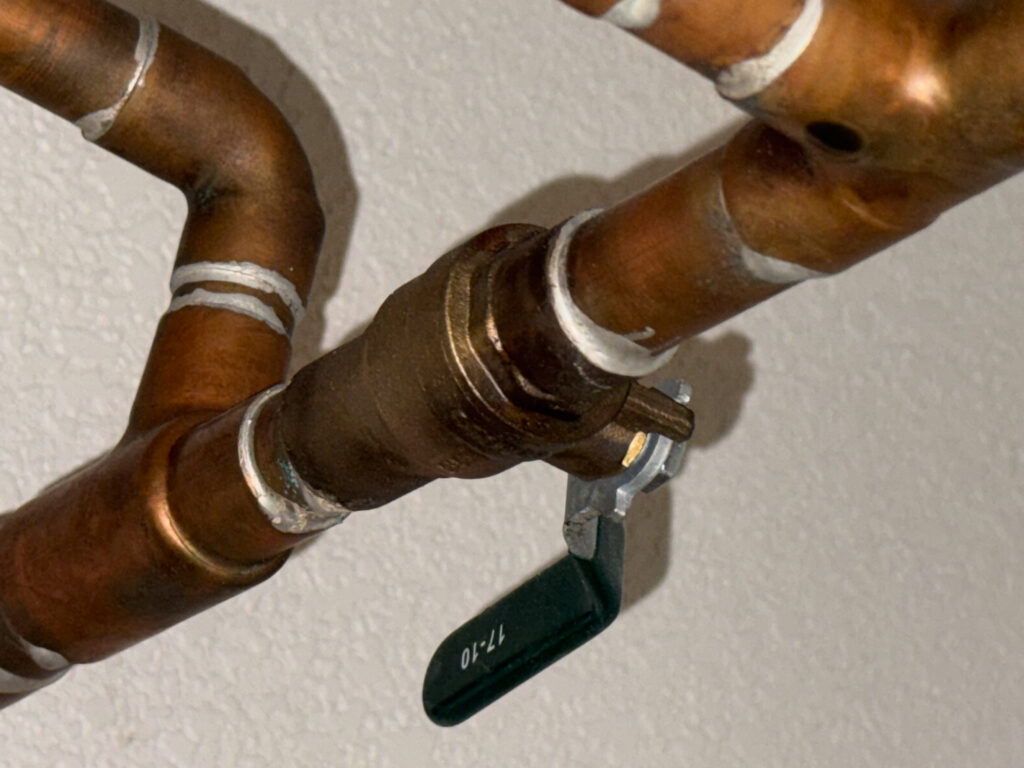
Quick answer: Ask for a localized repair assessment when the evidence points to an isolated failure. Request partial-replacement and whole-house options when documented problems extend beyond that location. One copper pinhole leak does not automatically mean every pipe needs replacing; WSSC Water reports cases where a section repair was followed by no further leaks. Compare proposals using the same replacement boundaries, access plan, permits and finished-wall restoration—not just the plumbing total. (wsscwater.com)
This guide focuses on residential water-supply piping. The pricing example is for Seattle/Puget Sound, Washington, in U.S. dollars, with dates identified below. It is not a national price forecast.
1. Define what each repair option actually includes
For a useful bid comparison, ask contractors to describe their proposals using these working definitions:
| Option | Scope to request in writing | Main question |
|---|---|---|
| Localized repair | The specific failed pipe section, fitting or connection | What evidence supports stopping here? |
| Partial replacement | A named branch, area or group of supply lines | Exactly which older pipes remain? |
| Whole-house repiping | The agreed hot- and cold-water distribution system throughout the home | Where does replacement begin and end? |
Do not rely on the word “repipe” alone. Public Health—Seattle & King County uses it for replacement of all or portions of a building’s water-supply or drainage piping. The label therefore does not establish a complete scope. (kingcounty.gov)
Ask each bidder to identify the exterior service line, interior distribution, water-heater connections, fixture shutoffs and concealed shower connections separately. Mark each as included, retained or excluded.
Also require an explicit statement about drains and sewers. Treat them as outside this comparison unless the written proposal specifically includes them.

2. Build a leak history before choosing the scope
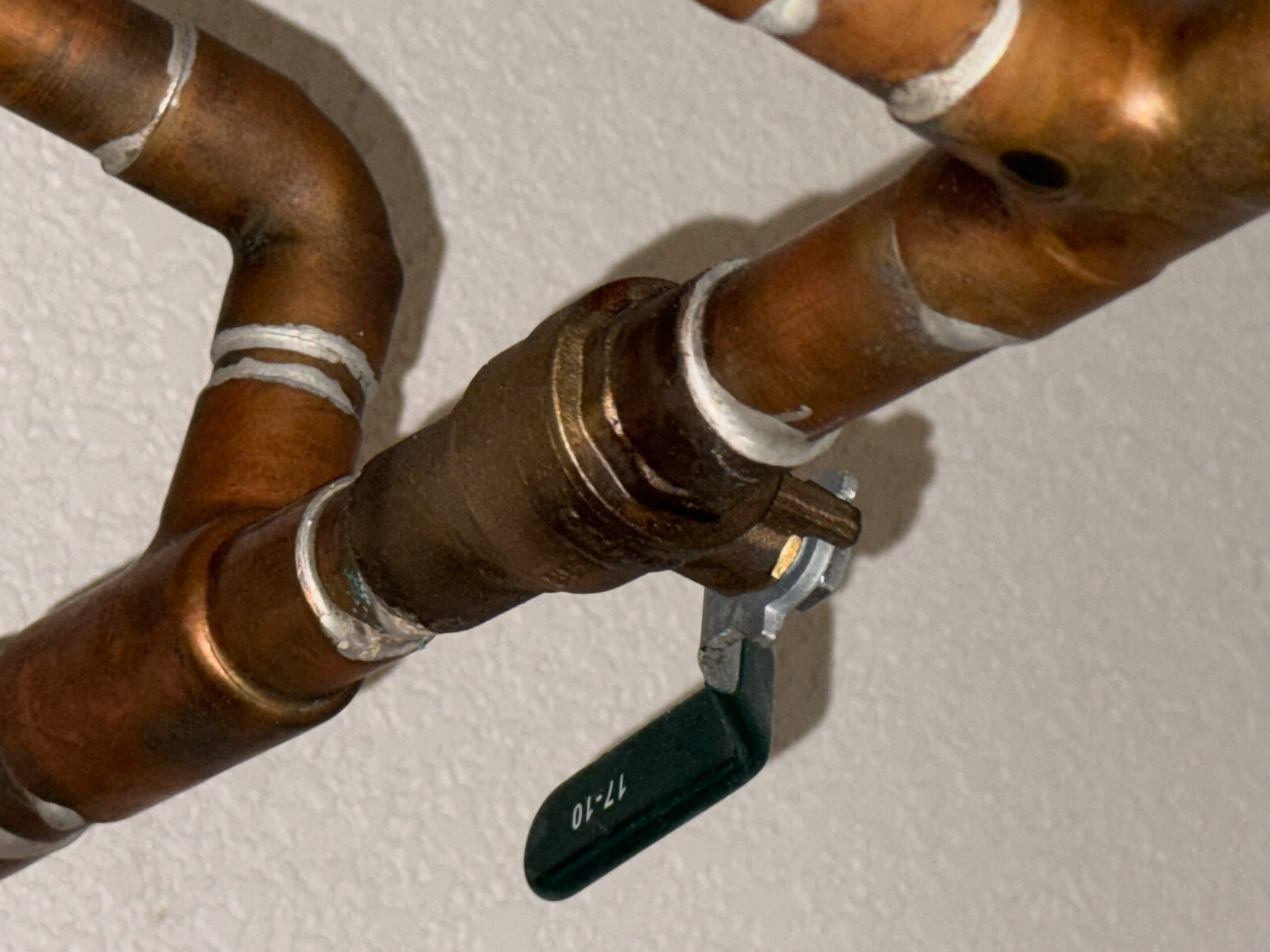
An active failure needs prompt attention; do not postpone necessary repair while collecting replacement proposals. For copper pitting failures, WSSC Water identifies replacement of the failed section as the immediate priority to limit water damage. Its guidance also says another leak is not inevitable and replacing all copper piping does not guarantee freedom from future problems. (wsscwater.com)
Prepare a short evidence file for the assessment:
- Location and date: Record each confirmed leak by room and pipe run.
- Failure description: Keep the plumber’s explanation of what failed.
- Material: Include identified pipe markings and photographs, not guesses based only on color.
- Previous work: Collect invoices showing replaced sections and retained piping.
- Observed symptoms: Note which fixtures are affected and whether the issue involves hot water, cold water or both.
- Damage and access: Photograph existing openings and damaged finishes.
Then ask: “What finding makes this an isolated repair, an area-wide replacement or a whole-system project?”
Request separate prices for technically reasonable alternatives. If a contractor rules one out, ask for the reason in writing. This evidence-first approach is a comparison tool, not a diagnosis or a universal leak-count threshold.
3. Check accepted materials and manufacturer requirements
Material choice must start with the project’s jurisdiction and installation conditions, not a blanket ranking.
For example, King County lists copper, PEX and CPVC among commonly approved materials for inside water distribution. Its outside-waterline list differs. That distinction matters when a proposal combines an interior repipe with an exterior service replacement. Confirm the requirements for your actual address and application. (kingcounty.gov)
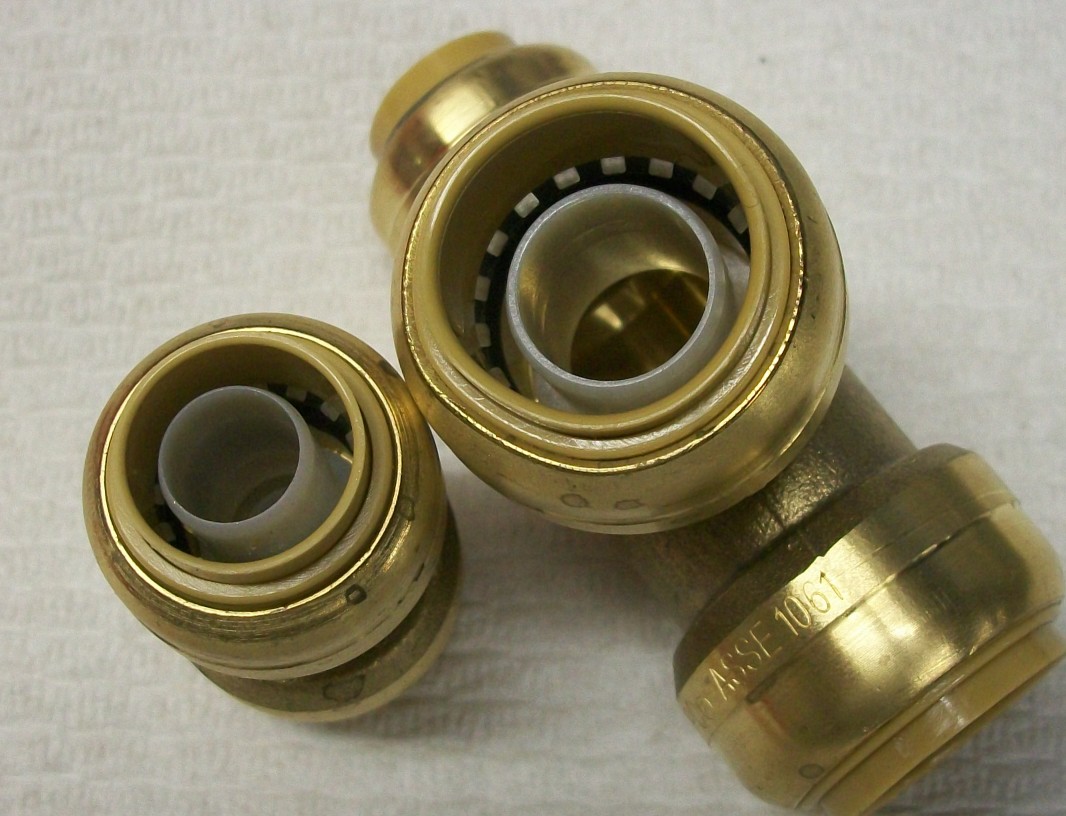
Ask the proposal to identify the pipe product, fitting system and connection method—not merely “plastic pipe” or “new copper.”
Manufacturer requirements also deserve attention. Uponor’s residential installation guide addresses matters including protection at slab penetrations, support and installation conditions, UV exposure, and testing. Those instructions are product-specific; they should not be treated as interchangeable requirements for every PEX system. (uponor.com)
Useful questions include:
- Which existing materials will the new system connect to?
- Are the proposed fittings approved for their intended locations?
- What protection or insulation is included?
- Which installation instructions will govern the work?
- Who will address any electrical or structural issue affected by rerouting?
Refer adjacent electrical or structural work to appropriately qualified professionals.

4. Compare access and restoration before comparing totals
A pipe-material comparison alone misses important scope differences. A Puget Sound contractor’s published guide identifies fixture count, routing, crawlspace or finished-wall access, and patch-and-paint scope as pricing variables. These are useful inspection questions, although the contractor’s pricing is not an independent market survey. (ecoserviceswa.com)
Use the following worksheet to make bidders explain their assumptions:
| Budget category | What to clarify |
|---|---|
| Plumbing installation | Replacement boundaries, fixture connections, valves and retained sections |
| Access | Proposed wall, ceiling, cabinet or floor openings |
| Protection | Floor coverings, work-area containment and protection of belongings |
| Permits and testing | Application, inspections, testing and responsibility for corrections |
| Restoration | Drywall, plaster, texture, primer, paint, tile and trim |
| Cleanup | Debris removal, daily cleanup and final cleaning |
| Unknown conditions | Allowances, exclusions and written change-order procedure |
These are requested comparison categories, not a claim that every project needs every item.
Make every bidder use the same worksheet. The National Association of Insurance Commissioners recommends comparing estimates that include the same things and putting tasks, dates and prices into a written contract. (content.naic.org)
5. Use dated regional prices as context, not as your quote
For a clearly identified regional reference, Eco Electric, Plumbing, Heating And Air publishes these Seattle/Puget Sound ranges, stating that its pricing was updated in July 2026:
| Published scope | Contractor-published range, USD |
|---|---|
| Partial or staged repipe | $3,500–$8,000 |
| Whole-home PEX repipe | $8,000–$15,000 |
| Whole-home copper repipe | $15,000–$25,000 |
The company describes these as representative installed ranges involving materials, labor, permits and a defined drywall-patch scope. They are one contractor’s published estimates, not verified transaction averages, a recommendation of that company or a quote for your home. Do not assume complete painting or damage restoration is included. (ecoserviceswa.com)
Permits also need a current, separate check. Seattle & King County’s schedule effective January 1, 2026 lists a plumbing/backflow permit at $137 plus $27 per fixture, and notes a supplemental repipe fee based on anticipated inspections. Ask for the calculation applicable to your scope. (cdn.kingcounty.gov)
6. Worked example: compare bids for a two-bathroom home
Consider an illustrative two-bathroom home whose owner requests replacement of the same interior hot- and cold-water supply lines. The following are hypothetical scope differences—not actual bids or invented market prices.
| Comparison point | Proposal A | Proposal B | How to compare fairly |
|---|---|---|---|
| Replacement boundaries | Same agreed interior lines | Same agreed interior lines | Confirm with a written fixture list |
| Access assumption | Assumes the crawlspace route is usable | Includes a defined alternative where access is blocked | Ask what happens if A’s assumption fails |
| Wall repairs | Patching only | Patching, texture, primer and specified painting | Obtain the missing finish-work price for A |
| Cabinet or tile work | Excluded | Separately priced allowance | Compare the same finished outcome |
| Cleanup | Debris haul-away | Haul-away and specified final cleaning | Define what remains for the homeowner |
The comparison result: A lower plumbing subtotal is not yet a lower completed-project price. Before choosing, add the required excluded work to Proposal A and ask both bidders to address the same access uncertainty. Comparing equivalent work is also the approach recommended by University of Wisconsin–Extension. (lincoln.extension.wisc.edu)
A permit calculation shows why bathroom count alone is insufficient. King County’s published application example counts hot-water repiping, cold-water repiping and one replaced concealed tub/shower valve as three representative permit fixtures—not every fixture in the building. Applying the 2026 schedule gives:
$137 + (3 × $27) = $218
That is the illustrated base permit calculation only, before applicable supplemental or other fees. It is not the complete permit bill for this hypothetical home. (kingcounty.gov)
7. Plan for living in the home and completing the finishes
Request a project-specific occupancy plan before signing. Do not treat a general advertised completion time as a promise for your house.
Ask the contractor to answer:
- When will water be unavailable?
- Will a usable toilet and washing arrangement be available overnight?
- Which rooms must be emptied or kept clear?
- Who moves appliances, stored items and furniture?
- When can access openings be closed?
- Who coordinates the plumber, inspector and restoration trades?
- What condition will each room be left in at handover?
Put the answers into the scope or schedule rather than leaving them as verbal assurances. The FTC recommends that the written agreement include estimated start and completion dates and promises concerning work and cost. (consumer.ftc.gov)
If you intend to arrange painting or other restoration yourself, confirm the handoff point and its effect on scheduling and warranties. University of Wisconsin–Extension specifically advises checking those consequences when owners undertake restoration work. (lincoln.extension.wisc.edu)
8. Avoid common mistakes and check the finished work
Do not turn one symptom into a whole-house diagnosis. Ask for documented findings and a reasoned scope recommendation. WSSC Water’s copper-pitting guidance illustrates why a single failure does not establish the future condition of every pipe. (wsscwater.com)
Do not choose by the lowest headline price. Verify locally required credentials and request proof of insurance. The FTC recommends multiple written estimates and an explanation when prices differ substantially. (consumer.ftc.gov)
Do not leave changes informal. Agree how concealed conditions will be documented and priced. The FTC describes a change order as written authorization for a change or addition that may affect cost and schedule. (bulkorder.ftc.gov)
Before accepting completion, use a project-specific checklist:
- Obtain applicable inspection approvals and permit records.
- Request the contractor’s testing and commissioning documentation.
- Review the fixture list together and document outstanding problems.
- Confirm that excluded or retained piping matches the agreement.
- Check restoration and cleanup against the specified finish standard.
- Collect warranty documents, product information and final invoices.
Testing should follow applicable requirements and the selected system’s instructions; Uponor’s guide, for example, includes system-testing guidance. (uponor.com)
The decision is not “repair cheaply” versus “replace everything.” It is choosing a justified scope, then comparing the cost of delivering that scope through inspection, restoration and cleanup.