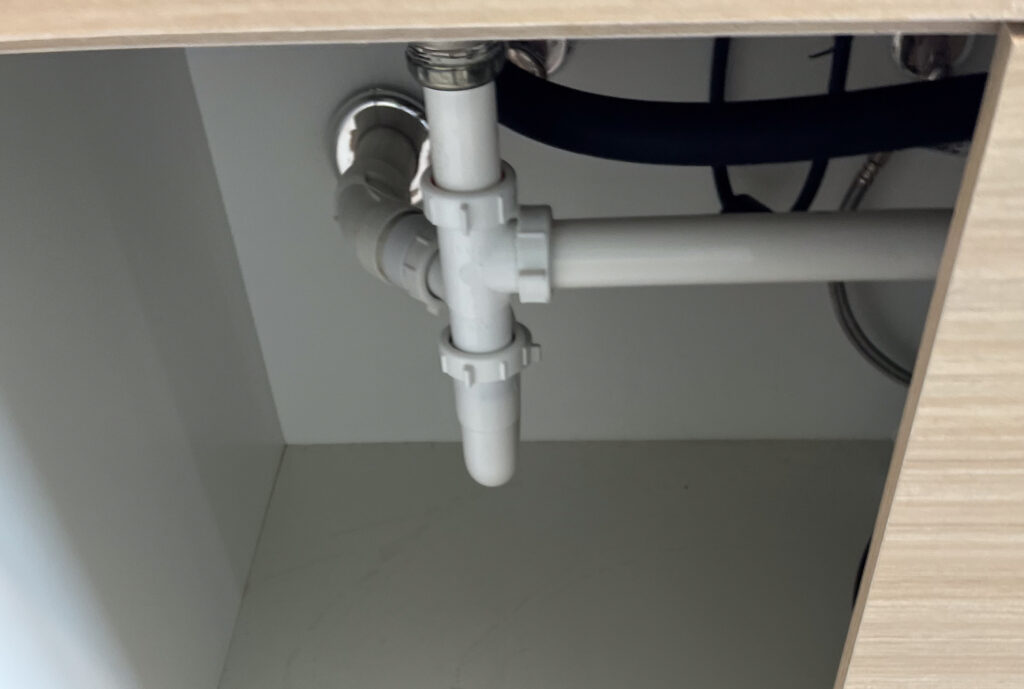
Quick answer: A kitchen faucet’s purchase price is only one part of replacement cost. Installation also depends on whether the new faucet fits the existing mounting holes and deck thickness, whether its supply connections match, and whether the installer can reach the fittings. As one regional reference—not a national average—Ben’s Plumbing’s August 6, 2026 Seattle guide lists kitchen faucet installation at US$150–$450, excluding the faucet and within a discussion of labor and basic installation materials. Connection repairs and difficult removal can add work. Confirm the exact scope in a written local proposal. (bens.plumbing)
The best preparation is to choose a faucet that fits the sink you already have, then ask the installer to identify anything that falls outside a straightforward replacement. Manufacturer specifications establish compatibility; a contractor’s assessment establishes the work required. Neither the fixture’s price tag nor another homeowner’s installation bill answers both questions.
1. Separate the faucet price from installation and repairs
Published prices are useful only when their inclusions are clear. These two examples show why “faucet installation” does not describe one universal package:
| Published regional reference | Installation amount, US dollars | Important limits |
|---|---|---|
| Ben’s Plumbing, Seattle; updated August 6, 2026 | $150–$450 for kitchen faucet installation | Its guide discusses labor and basic materials separately from the faucet. This is the contractor’s published guidance, not a quote for your home. |
| Keeley’s Plumbing, serving DuPage County, Illinois; price book in its January 2026 upload directory, checked November 22, 2026 | $310 to install a customer-supplied kitchen faucet | Lists an additional $8 for each supply line. The document’s effective date is not stated. |
These are separate businesses’ published figures, not a surveyed regional range or evidence that either price applies elsewhere. (bens.plumbing)
Ask for your proposal to separate:
- The faucet, identified by model and finish.
- Standard removal, installation and testing.
- Supply lines, adapters, mounting plates and other materials.
- Shutoff-valve or piping repairs.
- Disposal, taxes, additional visits and any applicable permit charges.
Treat that list as a comparison worksheet, not a claim that every job needs every item. The useful question is: “What conditions must be true for this installation price to apply?”
2. Check mounting holes and deck thickness before buying
Do not select a replacement from its appearance alone. Delta’s installation guidance says to compare the faucet’s installation sheet with the countertop’s hole configuration. A compatible three-hole escutcheon—a cover plate around the faucet base—may be needed when installing a single-body faucet over three existing holes; it is not necessarily included. (deltafaucet.com)
Record the visible arrangement without dismantling the existing faucet:
- How many openings serve the faucet and accessories?
- Is a cover plate hiding additional holes?
- Are there separate handles, a side sprayer or a soap dispenser?
- Will every unused opening have an agreed treatment?
Then give the installer the proposed model number and photographs. Ask them to confirm hole diameter, spacing, plate coverage and mounting thickness.
For a concrete example, Moen’s published Arbor 7594-series specification lists installation through one or three holes, a minimum hole diameter of 1½ inches, and a maximum deck thickness of 2½ inches. Those figures illustrate the checks required; they are not dimensions for all kitchen faucets. The document also warns that more than one version of the model exists. (assets.moen.com)
If the installation requires another hole, a larger opening or work beneath the countertop, pause before purchasing. Ask who will assess and perform that alteration, who will approve its location, and whether it is included in the price. Do not assume “faucet replacement” authorizes countertop modification.
3. Check clearance above and below the sink
Compatibility includes usable space, not just the opening through which the faucet fits. Manufacturer drawings provide dimensions and operating information; compare those with your actual sink location. (assets.moen.com)
Use these practical checks when discussing the proposed model:
- Behind the handle: Can it move through its full travel without contacting the backsplash?
- Above the spout: Is there room beneath shelves, cabinets or window trim?
- Over the bowl: Where will the outlet sit relative to the sink?
- Below the deck: Can the installer reach and secure the mounting hardware?
- Inside the cabinet: Is there an unobstructed path for a pull-down hose?
Moen’s pull-down installation instructions recommend an 8-by-8-inch clear area for the hose and weight to travel, free of movable items such as cleaning bottles. That is manufacturer guidance for the covered installation, not a universal cabinet-size requirement. (assets.moen.com)
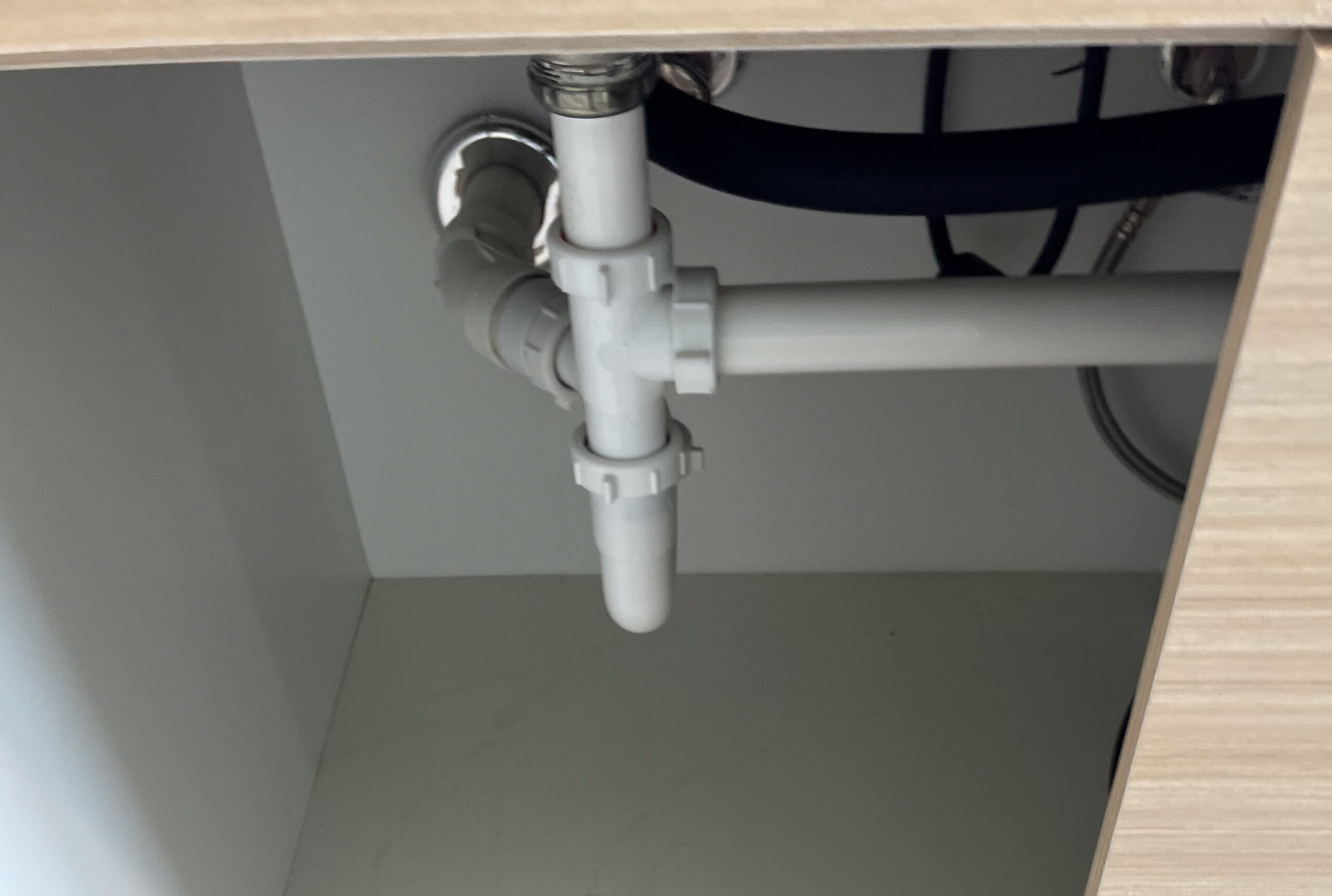
Before requesting a price, photograph the entire open cabinet as well as the fittings. Ask whether any fixed obstruction needs attention. Clearing stored items is useful preparation, but it does not establish whether the mounting hardware is accessible or the installation is compatible.
4. Confirm supply connections and accessory requirements
Distinguish the hot and cold supply connections from the pull-down spray hose. A faucet may include flexible supply lines already attached: Moen’s Arbor 7594 specification, for example, identifies flexible supplies with ⅜-inch compression fittings. Do not automatically add a generic pair of hoses to the shopping list. Have the installer confirm what the selected model includes and what the existing valves require. (assets.moen.com)
Ask these questions before authorizing materials:
- Do the supplied connections match the existing shutoff valves?
- Will they reach without strain or an unsuitable bend?
- Are extra connectors or replacement lines actually necessary?
- Does the proposal include those parts and their installation?
- What happens if an existing connection cannot be reused?
Excess length also needs proper handling. Delta’s kitchen-faucet guidance warns against forcing or kinking its supply tubing and describes managing extra length in a loop. The applicable model’s instructions should govern the installation—not a general assumption that every hose can be shortened. (deltafaucet.com)
Electronic accessories deserve their own scope check. Moen’s MotionSense Wave guide describes battery operation and an optional AC adapter. Confirm the exact faucet’s power arrangement and included equipment rather than assuming every touchless faucet needs new electrical work. If electrical alterations are proposed, request a separate scope from a qualified professional. (assets.moen.com)
5. Identify corrosion and access problems before work starts
An old faucet can be compatible with its replacement yet difficult to remove. Ben’s Plumbing identifies corroded mounting nuts and nonstandard connections as reasons replacement work becomes more involved. Delta likewise recommends involving a plumber when shutoff valves are old, corroded or will not turn. (bens.plumbing)
Send clear photographs of:
- The mounting area beneath the faucet.
- Both shutoff valves and their connections.
- Visible corrosion or mineral deposits.
- The cabinet opening and fixed obstructions.
- Any visible moisture or damaged cabinet material.
Photographs help define questions; they do not prove that a valve works or establish the condition of concealed piping. Ask what can be priced in advance and what remains subject to inspection.
Agree on a stop-and-approve process: if the installer discovers a failed valve, damaged connection or removal problem, they should explain the additional work and price before proceeding beyond the agreed scope.
Do not force a stuck valve as a pre-visit test. Moen’s installation instructions require complete water shutoff before faucet removal; uncertain isolation belongs in the professional assessment. (assets.moen.com)

6. Compare an accessible replacement with a repair-heavy job
Consider two scopes—not two invented quotes.
Accessible, compatible replacement: The new faucet matches the existing openings, its connections are suitable, the shutoffs are serviceable, and the mounting area is reachable.
Using Keeley’s published Illinois schedule purely as an arithmetic example:
| Listed item | Calculation |
|---|---|
| Customer-supplied kitchen faucet installation | $310 |
| Two separately required supply lines | 2 × $8 = $16 |
| Listed installation-and-line subtotal | $326 |
The faucet purchase is separate. The example assumes two chargeable lines are needed; that must be confirmed, not presumed. It does not establish an all-in price, tax treatment or repair allowance. (keeleysplumbing.com)
Cramped replacement requiring connection repairs: The installer must work around fixed obstructions, remove seized hardware and repair an unsuitable connection before fitting the faucet. Those are additional scope questions, consistent with the access and connection complications identified in the Seattle guide. There is insufficient evidence here to assign this particular scenario a reliable dollar premium. (bens.plumbing)
Ask for separate descriptions of access work, removal difficulty and connection repairs. A single unexplained “difficult installation” charge gives you little basis for comparing proposals.
7. Approve a complete scope and check the finished work
Before accepting a proposal, request written answers to these final questions:
- Which faucet and accessories will be installed?
- Who confirms compatibility before the existing faucet is removed?
- What removal, materials and testing are included?
- Are valve repairs, piping changes or countertop alterations excluded?
- Who performs any necessary sink or countertop work?
- How will additional work be approved and priced?
- Who handles a defective customer-supplied faucet or a return visit?
At handover, ask for a demonstration of hot and cold operation, handle clearance, spray functions and hose retraction. Request confirmation that the installer completed the manufacturer’s flushing and leak checks. Delta’s guidance includes flushing and final connection checks, while Moen’s instructions address keeping the pull-down hose’s travel area clear. (deltafaucet.com)
The common budgeting mistake is buying the faucet first and asking about fit later. Reverse that order: confirm compatibility, identify connection and access uncertainties, and then compare prices for the same written scope.
Read next: How to Compare Plumbing Bids: Scope, Payments and Hidden Costs